
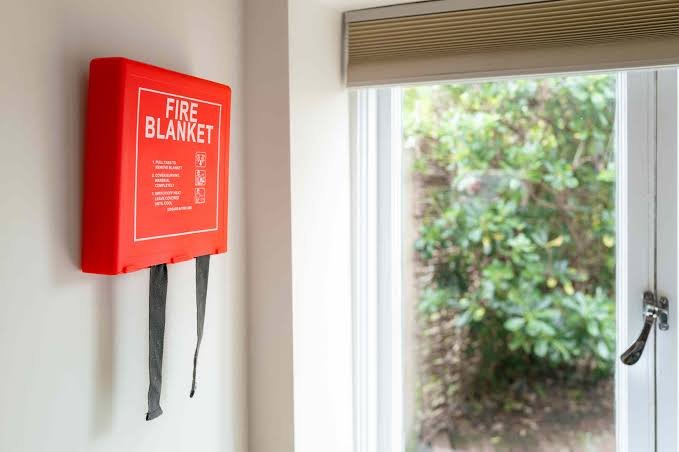
Fire blankets are simple pieces of fire-safety equipment, but their value depends heavily on their condition, accessibility, and suitability for the intended use. A blanket that is damaged, contaminated, difficult to reach, or stored incorrectly may not provide the protection expected from it during an emergency.
For homes, offices, restaurants, schools, workshops, laboratories, and other premises in Pakistan, fire blankets can form one part of a wider fire-safety strategy. They should not, however, be viewed as a replacement for smoke detection, fire alarms, suitable extinguishers, emergency exits, or professional emergency response.
The Building Code of Pakistan Fire Safety Provisions 2016 covers fire prevention, life safety, fire protection, inspection, maintenance, servicing, and testing of fire-protection systems and equipment.
Good maintenance starts with a simple principle: fire-safety equipment must be ready before an emergency happens.
What Is a Fire Blanket?
A fire blanket is a specially designed fire-resistant sheet intended for certain small fire situations or for smothering flames on a person’s clothing. It works by covering the fire and helping separate the flames from the oxygen needed to continue burning.
Fire blankets are commonly associated with kitchens and other areas where small cooking-related incidents may occur. They may also have applications in workplaces depending on the hazards present and the manufacturer’s instructions.
However, a fire blanket is not suitable for every fire. It should only be used where the blanket is specifically designed and rated for the situation, and people should never put themselves at unnecessary risk trying to control a fire.
If a fire is spreading, producing dangerous smoke, or cannot be safely controlled, evacuation and contacting emergency services should take priority.
Why Fire Blanket Maintenance Matters
Many businesses and households buy fire blankets and then forget about them.
Because a fire blanket does not have complicated electronics or moving parts, it can be easy to assume that it requires no maintenance. That assumption can be dangerous.
A blanket may deteriorate because of:
- Moisture
- Dust
- Grease
- Chemicals
- Heat exposure
- Physical damage
- Improper storage
- Age
- Tampering
- Poor installation or mounting
A fire blanket is an emergency product. It may remain unused for years and then suddenly be needed. Its condition should therefore be checked before an emergency rather than discovered during one.
1. Check the Blanket Regularly
One of the simplest maintenance habits is visual inspection.
The person responsible for fire safety should periodically check that the blanket remains in its designated location and appears to be in good condition.
Look for obvious issues such as:
- Tears
- Holes
- Frayed material
- Severe staining
- Burn marks
- Contamination
- Missing packaging
- Damaged mounting equipment
- Signs of unauthorized use
Do not assume that a blanket is safe simply because it is still hanging on the wall.
The inspection frequency should be based on the manufacturer’s instructions, the environment, the risk level, and the property’s fire-safety management arrangements.
2. Keep the Fire Blanket Accessible
A fire blanket is useful only if people can reach it when appropriate.
Avoid placing it behind:
- Boxes
- Shelves
- Heavy equipment
- Stored materials
- Furniture
- Cleaning supplies
- Unnecessary decorations
A busy commercial kitchen, workshop, or storage area can change considerably over time. An initially accessible blanket can become blocked without anyone noticing.
During routine inspections, confirm that the designated location remains accessible.
3. Make Its Location Easy to Identify
Employees and other responsible occupants should know where fire-safety equipment is located.
A fire blanket should be stored in the location recommended by the manufacturer and identified appropriately where necessary.
Businesses can include fire blankets in their general fire-safety orientation so employees understand where the equipment is located and what it is intended for.
This is particularly important in workplaces with staff turnover. New employees may not know where emergency equipment is kept unless the business includes it in basic safety information.
4. Inspect the Packaging
Many fire blankets are supplied in protective packaging or containers designed to keep the blanket ready for use.
During inspection, check whether:
- The packaging is intact
- The release mechanism appears undamaged
- The blanket is still properly contained
- Instructions remain available
- The container shows signs of damage
- The blanket appears to have been removed or tampered with
Do not modify the packaging or mounting arrangement without following the manufacturer’s instructions.
If the packaging is damaged in a way that could interfere with access to the blanket, seek advice from the supplier or a competent fire-safety professional.
5. Keep Fire Blankets Away From Unnecessary Contamination
Fire blankets can be installed in areas where grease, dust, steam, chemicals, and other contaminants are present.
A kitchen is an obvious example. Cooking areas can produce grease and airborne particles that may accumulate on nearby equipment.
The blanket should be kept in a condition suitable for its intended use. If it becomes heavily contaminated or damaged, it should not simply be cleaned or repaired without checking the manufacturer’s guidance.
A product that has been exposed to chemicals or significant heat may require professional assessment or replacement.
6. Do Not Use a Damaged Blanket
A damaged fire blanket should not be treated as reliable emergency equipment.
Small visible damage may indicate that the material has been compromised. More serious damage can obviously make the blanket unsuitable for its intended purpose.
If an inspection identifies:
- Holes
- Tears
- Burn damage
- Severe contamination
- Chemical damage
- Significant deterioration
the responsible person should consult the manufacturer or supplier about whether the blanket can remain in service.
If its suitability cannot be confirmed, replacement is generally safer than relying on questionable equipment during an emergency.
7. Replace a Blanket After Use When Required
A common mistake is assuming that every fire blanket can simply be folded back up and placed on the wall after being used.
Whether a blanket can be reused depends on the product, the nature of the incident, and the manufacturer’s instructions.
A blanket that has been exposed to flames, high heat, smoke, grease, chemicals, or physical stress should be assessed according to the manufacturer’s guidance.
For some products or situations, replacement may be appropriate rather than returning the blanket to service.
The key principle is simple: never assume that a used fire blanket is automatically ready for another emergency.
8. Check the Manufacturer’s Instructions
Different fire blankets can have different construction, certification, storage, and maintenance requirements.
The manufacturer’s documentation should therefore be treated as an important maintenance reference.
Keep information such as:
- Product model
- Manufacturer
- Installation instructions
- Maintenance recommendations
- Replacement guidance
- Certification information
- Supplier contact details
A business that has multiple fire blankets can maintain a simple equipment register containing these details.
This makes it easier to identify products during inspections and determine when professional advice is required.
9. Keep Fire Blankets Away From Unnecessary Heat
Fire blankets are designed for fire-related emergencies, but that does not mean they should be exposed continuously to unnecessary heat.
The storage environment should be consistent with the manufacturer’s recommendations.
Avoid positioning the equipment where it can be exposed unnecessarily to:
- Continuous high temperatures
- Open flames
- Hot surfaces
- Direct sources of radiant heat
- Severe moisture
- Corrosive chemicals
A fire blanket should be readily available without being placed directly in a location where it could be compromised by the same hazard it is intended to help address.
10. Do Not Treat a Fire Blanket as a Replacement for a Fire Extinguisher
Fire blankets and extinguishers serve different roles.
A blanket may be appropriate for certain small fires, while an extinguisher may be designed for specific classes of fire. Neither should be assumed to replace the other.
A complete fire-safety plan can include several layers:
- Smoke detection
- Fire alarms
- Portable extinguishers
- Fire blankets
- Emergency exits
- Emergency lighting
- Fire-resistant construction
- Evacuation procedures
- Staff training
- Professional inspection and maintenance
The appropriate combination depends on the building and its hazards.
The Building Code of Pakistan addresses fire protection, life safety, inspection, maintenance, servicing, and testing as part of the broader fire-safety framework.
11. Pay Special Attention to Kitchen Areas
Kitchens can present particular fire risks because of cooking equipment, oils, electrical appliances, gas appliances, and combustible materials.
A fire blanket may be one component of kitchen fire protection, but it should be accompanied by appropriate prevention measures and other fire-safety equipment.
Keep cooking areas clean and ensure that employees understand the property’s emergency procedures.
A fire blanket should not be positioned so close to a likely fire source that someone would have to reach through flames to retrieve it.
Its location should allow access without requiring a person to move toward an already dangerous fire.
12. Include Fire Blankets in Workplace Inspections
Businesses often conduct routine workplace inspections for electrical hazards, blocked exits, housekeeping problems, and equipment condition.
Fire blankets should be included in these inspections.
A simple inspection form can ask:
Location: Is the blanket in its designated place?
Access: Can it be reached easily?
Condition: Is there visible damage?
Packaging: Is the container or release arrangement intact?
Identification: Can employees identify it?
Environment: Is it exposed to unsuitable conditions?
Documentation: Are manufacturer details available?
This takes little time but helps prevent equipment from being forgotten.
13. Train Employees Without Encouraging Risk
Employees should know basic fire-safety procedures, including how to raise an alarm, leave the building, contact emergency services, and follow the organization’s evacuation plan.
Where fire blankets are provided, employees can also be taught what they are intended for and where they are located.
Training should emphasize that personal safety comes first.
Employees should not be expected to fight a fire that is growing, producing dangerous smoke, blocking an exit, or otherwise creating an unsafe situation.
Fire equipment is not a reason to delay evacuation.
14. Fire Blankets and a Fire Alarm System
A fire blanket is a manual piece of equipment. It does not detect smoke or automatically warn people about a developing fire.
That is why it should be considered part of a broader fire-protection strategy.
A properly designed fire alarm system can provide warning when a fire condition is detected, giving occupants an opportunity to begin evacuation and emergency procedures.
NFPA 72 is a major reference for fire alarm and signaling systems and addresses installation, inspection, testing, and maintenance of these systems.
For businesses researching a fire alarm system in Pakistan, it is important to understand that detection, notification, suppression equipment, evacuation planning, and maintenance work together rather than operating as isolated safety measures.
15. Keep Maintenance Records
A written record can make fire-safety management much easier.
For every fire blanket, a business can record:
- Location
- Product manufacturer
- Model or identification number
- Installation date
- Inspection date
- Condition
- Problems identified
- Corrective action
- Replacement date
- Person responsible for inspection
Records are particularly valuable for offices, factories, warehouses, restaurants, schools, hotels, and other premises with multiple safety devices.
They can also help identify patterns. If equipment repeatedly becomes damaged or contaminated, the business may need to reconsider its location or storage conditions.
16. Check Fire Blankets During Business Changes
Businesses frequently change their layouts.
A restaurant may move cooking equipment. A shop may add shelving. An office may be renovated. A workshop may introduce new machinery.
These changes can affect fire-safety equipment.
Whenever the building layout or activities change, review the location and suitability of fire blankets and other emergency equipment.
A blanket that was easy to reach before a renovation could become hidden behind new equipment.
Similarly, a business that begins using new materials or processes may need a new fire-risk assessment.
17. Know When to Call a Professional
Routine visual checks can be handled as part of an organization’s normal safety program, but not every fire-safety problem should be solved internally.
Seek professional advice when:
- A blanket has significant damage
- Its certification or suitability is uncertain
- The product has been exposed to chemicals
- The blanket has been involved in a fire
- The manufacturer cannot be identified
- A building’s fire risks have changed
- A complete fire alarm or suppression system is being designed
- Local fire-safety requirements are unclear
Pakistan Engineering Council lists a professional specialization for the installation, commissioning, and maintenance of fire detection, alarm, and suppression systems and allied equipment.
This illustrates why larger fire-protection projects should be handled by appropriately qualified professionals rather than relying entirely on informal maintenance.
18. Understand the Difference Between Inspection and Replacement
Inspection does not automatically mean replacing every fire blanket after a fixed period.
The correct approach depends on the product’s specifications, condition, environment, usage history, and manufacturer’s recommendations.
At the same time, a business should not continue using old equipment simply because it has never been used.
If the product is damaged, its suitability cannot be confirmed, or its manufacturer recommends replacement, it should be addressed promptly.
The goal is to maintain equipment that can reasonably be expected to perform its intended function.
Fire Blanket Maintenance Checklist
A simple checklist can help businesses stay organized:
- Keep the blanket in its designated location.
- Make sure access is not blocked.
- Check the packaging and mounting arrangement.
- Look for visible damage.
- Check for contamination.
- Keep it away from unsuitable environmental conditions.
- Follow manufacturer instructions.
- Record routine inspections.
- Assess the blanket after any use.
- Replace equipment when required.
- Train responsible employees.
- Review locations after building changes.
- Maintain other fire-protection systems at the same time.
Fire Safety in Pakistan
Fire-safety requirements vary according to building type, occupancy, hazards, size, and applicable local requirements.
The Building Code of Pakistan Fire Safety Provisions 2016 provides a broader framework covering fire prevention, life safety, fire protection, inspection, maintenance, repairs, servicing, and testing of fire-protection systems and equipment.
For more complex premises, businesses should consider the requirements applicable to their particular building and consult an appropriately qualified professional where necessary.
A fire blanket should never be considered a complete fire-protection solution. It is one component of a broader approach that can include alarms, detection, extinguishers, emergency exits, training, evacuation planning, and regular maintenance.
For information and fire-safety products, businesses and property owners can also explore Flame Defender.
Final Thoughts
Fire blankets are simple, but simple equipment still requires attention.
A blanket that is damaged, inaccessible, contaminated, improperly stored, or unsuitable for the environment may not provide the protection expected from it. Regular visual checks, proper storage, employee awareness, accurate records, and timely replacement can help keep this equipment ready.
More importantly, fire blankets should always be viewed as one part of a complete fire-safety strategy. Smoke detection, alarms, extinguishers, emergency exits, evacuation procedures, and professional maintenance all have important roles.
For homes and businesses in Pakistan, the best approach is to assess the risks, choose suitable equipment, follow manufacturer instructions, and review fire protection whenever the building or its activities change.
Fire safety is not finished when equipment is purchased. It is an ongoing responsibility to keep that equipment accessible, suitable, and ready for an emergency.
Frequently Asked Questions
1. How often should a fire blanket be inspected?
There is no single inspection interval that applies to every product and every environment. Follow the manufacturer’s instructions and include fire blankets in routine workplace or building fire-safety inspections. Check their accessibility, packaging, condition, and surrounding environment.
2. Can a fire blanket be reused after being used?
Do not automatically assume that a used fire blanket is safe to reuse. Its condition and suitability should be assessed according to the manufacturer’s instructions. A blanket exposed to significant heat, flames, chemicals, or damage may need to be replaced.
3. Where should a fire blanket be stored?
It should be installed or stored according to the manufacturer’s recommendations in a location that is readily accessible and not blocked by equipment, furniture, stock, or other objects. It should also be positioned so that a person does not have to approach an already dangerous fire to retrieve it.
4. Can a fire blanket replace a fire extinguisher?
No. Fire blankets and extinguishers have different purposes and are suitable for different situations. A fire-safety plan should use equipment appropriate to the hazards present rather than relying on one type of protection.
5. Is a fire blanket enough for complete fire protection?
No. A fire blanket is only one part of fire protection. Depending on the building and its risks, a complete plan may include smoke detection, a fire alarm system, extinguishers, emergency exits, emergency lighting, evacuation procedures, training, and professional inspection and maintenance.